

9 Sailboat Canvas Art Selection Tips for a Calm Home in 2026
Last updated November 21, 2026
Selecting sailboat canvas art that transforms a room into a coastal retreat requires careful attention to technique, palette, scale and authenticity. These nine tips draw on decades of representational painting and collector feedback to help you choose pieces that evoke lasting calm.
Table of contents
1. Look for canvas art painted from memory rather than photographs for deeper emotional resonance.
2. Choose pieces with a soft, harmonious palette that reads calmly from across the room.
4. Choose sailboat art that uses loose watercolour washes for an airy feeling.
5. Match the canvas size to the specific architectural location in your home.
6. Coordinate your nautical art with contemporary minimalist home decor for a cohesive look.
9. Select ready-to-hang canvas prints to simplify installation and reduce overall framing costs.
How to measure your wall space before buying large-scale sailboat canvas art
Maintaining archival canvas prints in high-humidity coastal homes
1. Look for canvas art painted from memory rather than photographs for deeper emotional resonance.
Work painted from memory carries the warmth of lived experience, not the frozen detail of a snapshot. Experienced painters draw on a lifetime of coastal observation to capture the feeling of a moment rather than its literal appearance, relying on personal recollections instead of photographs.
Collectors often say memory-based art reminds them of their own childhood cottage or favourite harbour because it reflects how the mind holds a place over time. The colours become softer, the edges less sharp, and the composition settles into the parts that matter most. When you choose sailboat canvas art built on memory, you bring home a painting that invites you to remember your own quiet mornings on the water. That emotional connection makes the piece a source of calm rather than decoration. Source: Maritime Seascapes.
2. Choose pieces with a soft, harmonious palette that reads calmly from across the room.
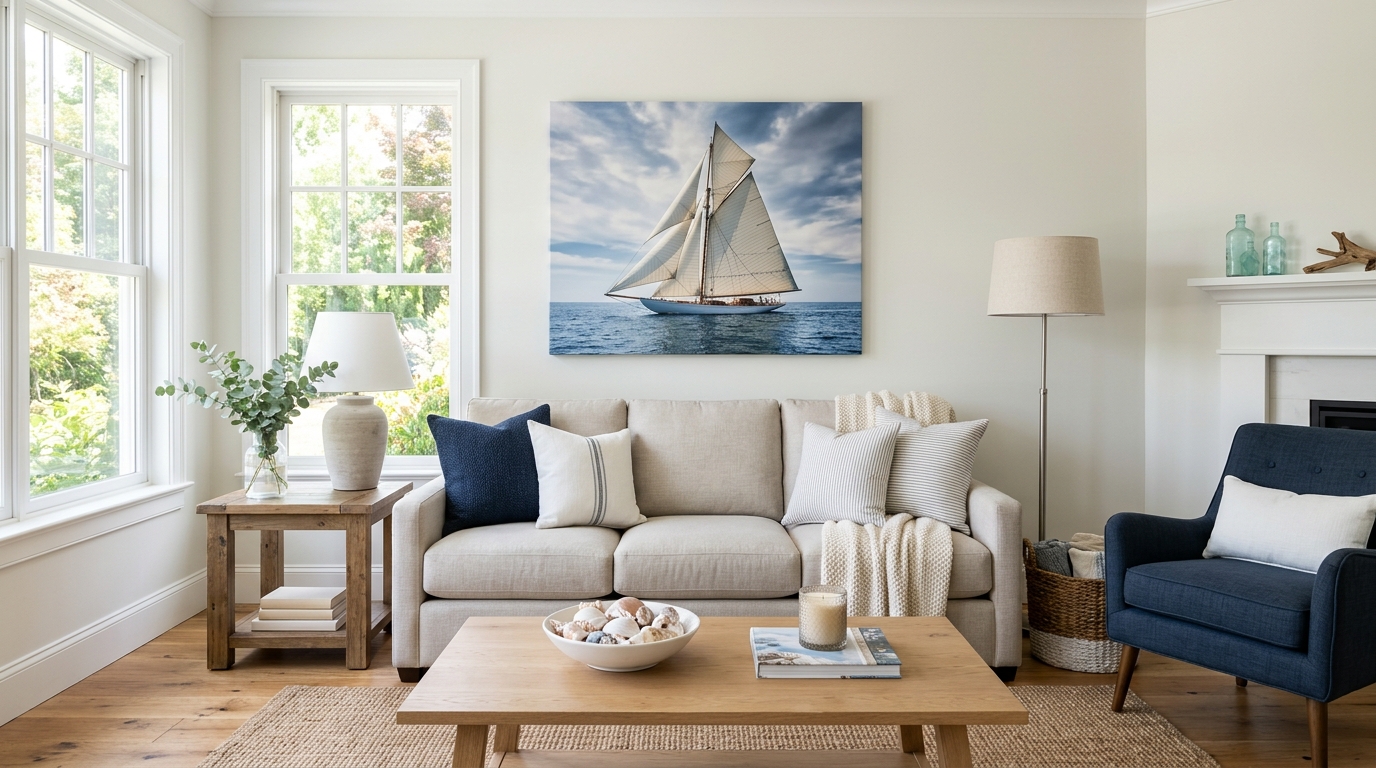
Sailboat art with a soft, harmonious palette reads as one calm scene from across the room, while still rewarding a closer look. Canadian painter Elizabeth A. Evans paints harbours and sailboats in gentle coastal colour, so the scene settles quietly into a room rather than competing with it. That calm, considered quality is something mass market digital decor rarely matches.
A harbour at dawn might show turquoise beside slate beside pale gold, all working together to build the glow of early light. The composition stays legible and calm, never chaotic. When you hang that piece in a living room or hallway, the colours shift subtly with the daylight as you move past it.
3. Select sailboat art from painters with formal training and decades of practice to ensure lasting quality.
A painter's formal education and sustained practice shape every technical decision, from colour mixing to compositional balance. Canadian painter Elizabeth A. Evans trained at the Montreal Museum of Fine Arts under the mentorship of Arthur Lismer, a member of the Group of Seven, and has painted for more than 60 years. In 2022 she was named Artist of the Year by the Nature Trust of B.C., recognising her contribution to Canadian representational painting.
Work from seasoned artists holds its visual and emotional value over decades, unlike trend-driven mass-market decor. The brushwork carries confidence, the palette avoids gimmicks, and the composition knows when to stop. When you buy sailboat canvas art from an artist with that depth of training, you invest in a piece that won't feel dated in five years or tired in ten. It becomes part of the home (trusted and valued) the way a well-made chair or a favourite book remains relevant through the years. Source: Maritime Seascapes.
4. Choose sailboat art that uses loose watercolour washes for an airy feeling.
Select pieces that use generous white space to allow the subject to breathe. Look for slender masts and soft reflections in shades like turquoise and slate blue to evoke calm afternoons. Warm up cool palettes with small touches of coral or mustard for a sunlit effect. The loose wash technique keeps the image light and open, never crowded or heavy on the wall.
A sailboat floating in unpainted canvas or pale sky gives the eye a place to rest. The composition doesn't demand attention, it offers it. That restraint translates directly into the feeling of the room. A hallway gains a sense of space. A bedroom feels quieter. A living area becomes a place you want to linger. If you lean toward minimalist or coastal interiors, this style of sailboat canvas art will complement your existing furniture and colour scheme without competing for dominance. It supports the mood you've already built. Source: iCanvas.
5. Match the canvas size to the specific architectural location in your home.
Large format prints work best above fireplaces or in grand entries, where they anchor the wall and draw the eye. Medium and small sizes are ideal for art groupings or intimate spaces such as a reading nook or hallway. Consider 36×36 inch squares for a modern, balanced look in large open-plan living areas. A piece that fits the wall correctly feels deliberate, not accidental. Too small and it disappears. Too large and it overwhelms the furniture below it.
Before you buy, measure the width of the furniture beneath the intended location. A good rule is to choose art that spans two-thirds to three-quarters of that width. If you plan a gallery wall, lay out the arrangement on the floor first to confirm spacing and proportion. When sailboat canvas art sits in the right spot at the right scale, it becomes architecture, not afterthought. The room reads as finished and intentional. Source: iCanvas.
6. Coordinate your nautical art with contemporary minimalist home decor for a cohesive look.
Semi-abstract sailboat styles complement clean lines in modern living rooms, softening rigid geometry without competing for attention. Gestural washes in the art can balance the hard edges of a hallway or beach house entry. Pairs well with other water-themed subjects like harbour views or lone sailboats at anchor. The key is shared restraint. If your furniture keeps colour to a minimum, choose sailboat canvas art with a muted palette of greys, blues and soft golds. If your space features natural wood and linen, look for paintings that echo those warm neutrals.
Avoid busy detail or high-contrast drama, which will fight the simplicity you've worked to establish. When the art and the room speak the same visual language, the effect is calm and cohesive. Each element supports the others, and nothing shouts. That harmony is what makes a space feel like a retreat rather than a showroom. Source: iCanvas.
7. Look for limited-edition prints that include a signed Certificate of Authenticity to protect your investment.
A hand-signed certificate confirms the edition size, the artist's signature and the work's provenance, distinguishing it from open-edition commercial prints. Maritime Seascapes limited-edition canvas prints arrive with a Certificate of Authenticity signed by Elizabeth A. Evans, documenting each piece as part of a controlled edition. This documentation is essential when you later gift, insure or resell the work. Limited editions hold their value better than unlimited runs because scarcity creates long-term demand among collectors.
The certificate also protects you if you ever need to verify the work's origin or pursue a claim. When you buy sailboat canvas art, you're not just acquiring decoration. You're bringing home a numbered work with a traceable history. That paper matters as much as the canvas itself, and it deserves a safe place alongside your insurance documents and appraisals. Source: Maritime Seascapes.
8. Choose sailboat canvas art that reflects real Canadian coastal locations for authentic regional character.
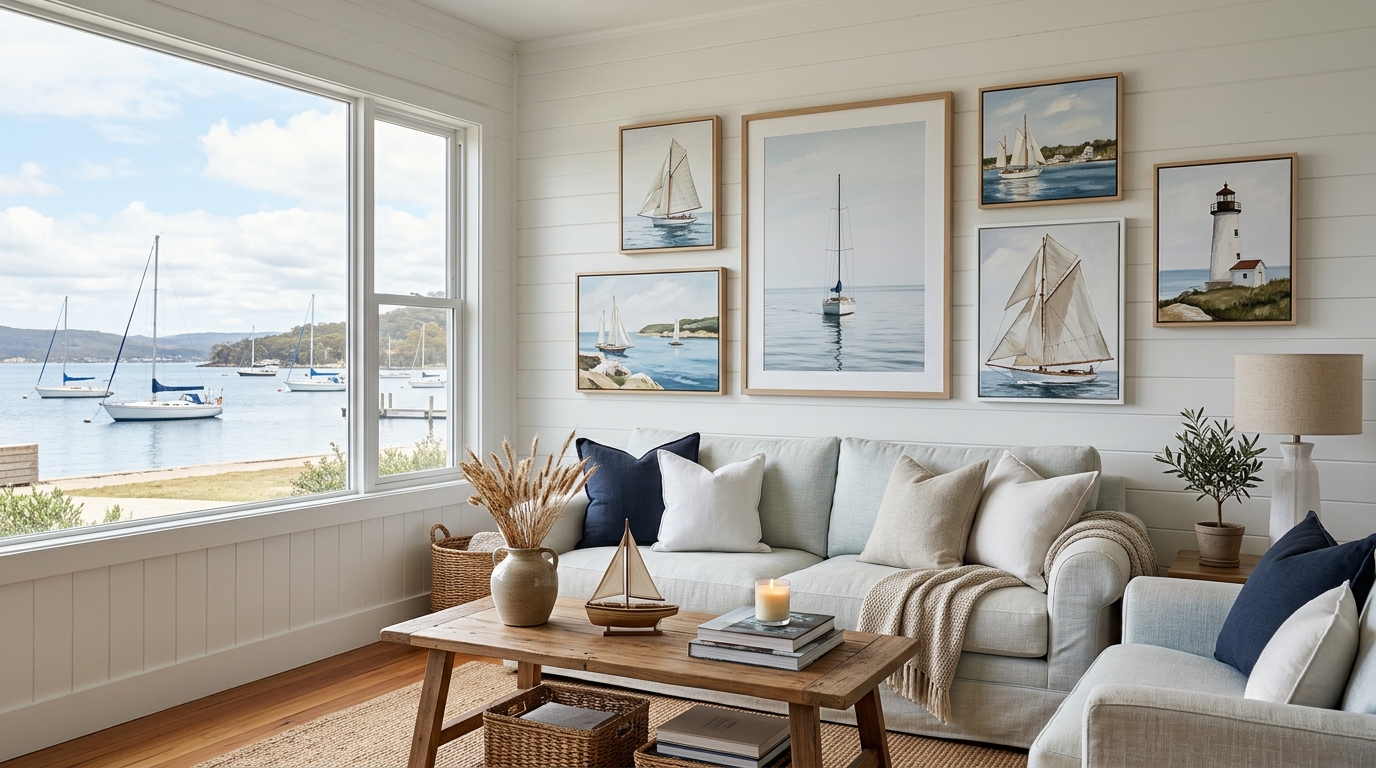
Art rooted in specific geography carries the light, weather and mood of that place, connecting the viewer to a living landscape. Paintings inspired by the Sunshine Coast, the Maritimes or the Great Lakes bring recognisable Canadian identity into the home. Collectors often choose work that reminds them of a childhood cottage, a family holiday or a beloved shoreline, strengthening the emotional bond with the piece.
When a sailboat print comes from an artist who lives and works on the coast, the authenticity shows in every brushstroke. The colour of the water, the shape of the horizon, the quality of the light at dawn... these details can't be faked from a studio thousands of kilometres inland. They come from observation, memory and time spent in those places. If you want your wall to carry the feeling of the Canadian coast, buy from someone who knows it firsthand. Source: Maritime Seascapes.
9. Select ready-to-hang canvas prints to simplify installation and reduce overall framing costs.
Gallery-wrapped canvas prints arrive with the image extending around the sides and mounting hardware already attached, so you can hang them immediately. This format eliminates the need for custom framing, which can double the cost and delay enjoyment of the work. The clean, frameless look suits both traditional and contemporary interiors, letting the sailboat image stand as the focal point.
When you open the package, everything you need is already in place. No trip to the frame shop, no decisions about mat colour or moulding width, no weeks of waiting. You simply choose the spot, mark the wall and hang. That simplicity matters, especially if you're furnishing a vacation property or preparing a room for guests. Ready-to-hang prints respect your time and your budget, delivering a finished look the day they arrive. For those who value convenience as much as beauty, this format is the clear choice. Source: Maritime Seascapes.
How to measure your wall space before buying large-scale sailboat canvas art
Measure the width and height of the wall section where the art will hang, noting any architectural features such as mantels, door frames or windows. Leave at least 15 to 20 centimetres of empty wall on each side of the canvas to prevent the piece from looking cramped. For art hung above furniture, position the bottom edge 15 to 25 centimetres above the top of the sofa, sideboard or bed.
Use painter's tape or kraft paper cut to the canvas dimensions to preview placement before you commit, checking sightlines from every seat in the room. Large sailboat prints work well above fireplaces or on feature walls, where their calm palette anchors the space. If you're unsure about scale, photograph the wall with the tape outline in place and review the image on your phone. What looks balanced in person should also read well in the frame of a camera. Measure twice, buy once. A canvas that fits the architecture correctly becomes part of the room's bones, not an afterthought tacked to a bare spot.
Maintaining archival canvas prints in high-humidity coastal homes
Hang canvas art on interior walls away from direct sunlight, which can fade pigments over time even in archival inks. In humid climates, ensure good air circulation around the canvas to prevent moisture from settling behind the stretcher bars. Avoid hanging sailboat art directly above radiators, fireplaces or air conditioning vents, where temperature swings can cause the canvas to expand and contract. Dust the surface gently every few months with a soft, dry microfibre cloth, moving in one direction rather than circular strokes.
If you live in a coastal cottage with seasonal closures, leave interior doors open and consider a dehumidifier to stabilise humidity levels when the house is unoccupied. Archival canvas prints are designed for lasting display, but simple care extends their beauty for decades. Never use glass cleaner, water or any solvent on canvas. If the surface needs more than dusting, consult a professional conservator. Treat the work as you would any valuable textile, and it will reward you with years of quiet beauty.
What to avoid when shopping for sailboat canvas art online
Steer clear of sites that don't name the artist or provide any background on training, technique or artistic philosophy, as these often sell anonymous drop-shipped prints. Avoid open-edition prints sold in unlimited quantities, which carry no scarcity and little future value compared to numbered limited editions. Skip listings that use generic stock descriptions such as 'calming nautical decor' without explaining the painting's origin, medium or creation process.
Don't buy from marketplaces that mix artist-made work with mass-produced commercial images, making it difficult to distinguish handmade from industrial output. Watch for vague guarantees or return policies, which may signal that the seller has no direct relationship with the artist or the print production. If you'd like a quiet introduction to authentic coastal art, explore the limited-edition print collection or learn more through greeting cards that offer the same artwork in a smaller format. Sites that show the artist's face, studio location and career history offer transparency that builds trust. When you know who painted the work and where they live, you're buying a story, not just a product.
Frequently asked questions
What sailboat canvas art is available from Canadian coastal artists?
Maritime Seascapes offers limited-edition canvas prints of sailboat and harbour scenes painted by Elizabeth A. Evans, who works from her studio in Gibsons on the Sunshine Coast of British Columbia. Each print is inspired by memories of the Canadian coast rather than photographs, capturing the feeling of a moment in calm fishing villages and harbours. Every canvas arrives ready to hang with a signed Certificate of Authenticity.
What makes sailboat canvas art calming for home spaces?
Sailboat and maritime subjects evoke the stillness of early morning harbours and the gentle rhythm of water, which many collectors find calming and grounding. Soft palettes of blues, greys and muted golds reduce visual noise and complement neutral or coastal-inspired interiors. Art painted from memory rather than photographs tends to carry a warmer, more reflective quality that invites contemplation.
What is the difference between an archival poster and a limited-edition canvas print?
An archival poster is a flat paper print, typically framed behind glass, sold in an open edition with no limit on quantity. A limited-edition canvas print is produced in a controlled, numbered edition, printed on canvas, gallery wrapped around stretcher bars, and accompanied by a signed Certificate of Authenticity. Limited-edition canvas prints hold greater long-term value and require no additional framing, arriving ready to hang.
How does the artist's training at the Montreal Museum of Fine Arts influence the sailboat designs?
Elizabeth A. Evans trained at the Montreal Museum of Fine Arts under the mentorship of Arthur Lismer, a member of the Group of Seven known for his bold Canadian landscapes. That formal education in representational painting informs her careful attention to colour harmony, composition and the balance between detail and simplicity. Her calm, carefully composed coastal scenes reflect decades of disciplined practice rooted in her early training.
Do these prints come ready to hang on arrival?
Yes, Maritime Seascapes limited-edition canvas prints arrive gallery wrapped with the image extending around the sides, and mounting hardware already attached to the back. You can hang them immediately without additional framing or preparation. Each print includes a signed Certificate of Authenticity.
Are these works based on real Canadian harbours or imaginary locations?
Elizabeth A. Evans paints from memory, drawing on a lifetime of observation along the Canadian coast, including the Sunshine Coast of British Columbia. While the paintings aren't literal portraits of a single harbour, they're inspired by real places and the feeling of being in those coastal locations. This approach gives the work authenticity and emotional resonance without tying it to a named address.
Choosing sailboat canvas art that transforms your home into a coastal sanctuary means looking beyond surface decoration to find work rooted in memory, training and place. When you bring home a limited-edition print from an artist who lives on the Canadian coast, you're acquiring more than an image. You're inviting decades of observation, formal discipline and quiet passion onto your wall. If you're ready to explore authentic maritime paintings that arrive ready to hang, visit the studio to claim the free bookmark and join the newsletter for updates on new releases and exhibitions.
