
11 Wall Art for Living Room Modern Ideas
Last updated November 22, 2026
Selecting wall art for a modern living room requires balancing clean architectural lines with meaningful visual warmth. These eleven strategies draw on representational painting traditions, Canadian maritime heritage, and six decades of studio practice to help you create a tranquil coastal sanctuary in a contemporary home.
Table of contents
2. Prioritize limited-edition prints over mass-produced decor to ensure exclusivity and value.
3. Incorporate representational coastal art to soften the sharp lines of modern architecture.
4. Connect your modern interior to Canadian heritage through Group of Seven influences.
5. Leverage art painted from memory to evoke a timeless sense of nostalgia.
6. Create a sophisticated gallery wall by grouping multi-panel art sets or diptychs.
7. Select ready-to-hang canvas prints for a sleek frameless modern look.
8. Anchor high-ceiling living rooms with vertical cloudscapes or triptych prints.
9. Layer art cards and smaller originals in reading nooks for intimate detail.
10. Utilize seasonal maritime themes to rotate the mood of your living space.
11. Choose art that supports conservation and local artist communities.
How to Measure Your Living Room Wall to Ensure Art is Scaled Correctly
Tips for Lighting Coastal Art to Highlight Brushwork and Texture
1. Choose a calm coastal scene to soften minimalist walls.
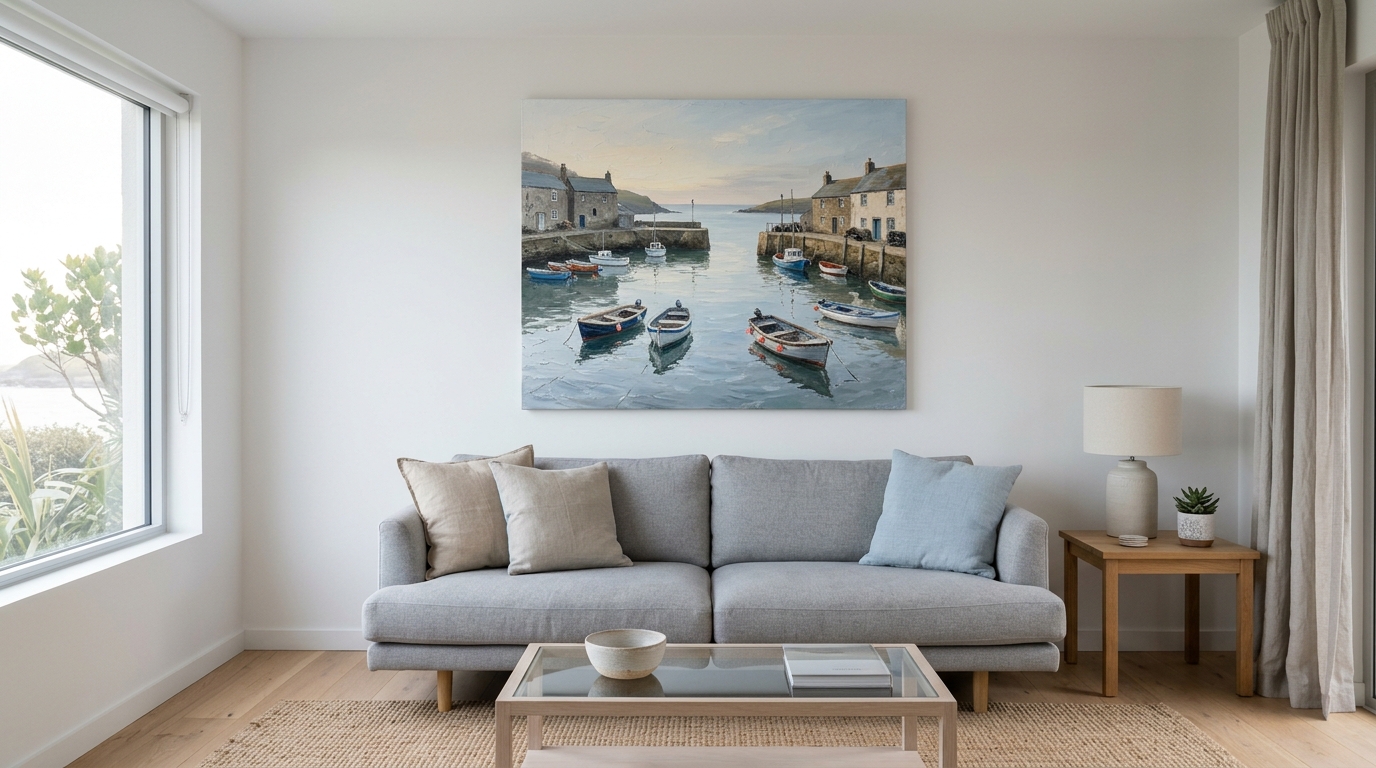
A calm coastal scene gives a minimalist room somewhere for the eye to rest. Maritime Seascapes' canvas prints offer a quiet fishing village or harbour scene in soft coastal colour that contrasts beautifully with smooth, modern drywall. Up close, there is detail to discover in the boats, the water and the shoreline. From your sofa, the same scene reads as one peaceful whole, a harbour or remembered coastline held in gentle light. That balance keeps a modern room feeling alive rather than static.
Changing daylight shifts the mood of a coastal painting without changing the composition. If your living room features flat expanses of white or grey wall, a calm maritime canvas introduces a welcome layer of colour and quiet that complements geometric furniture and industrial finishes. Consider a large horizontal piece above a low credenza to anchor the wall and draw visitors' eyes across the scene.
2. Prioritize limited-edition prints over mass-produced decor to ensure exclusivity and value.
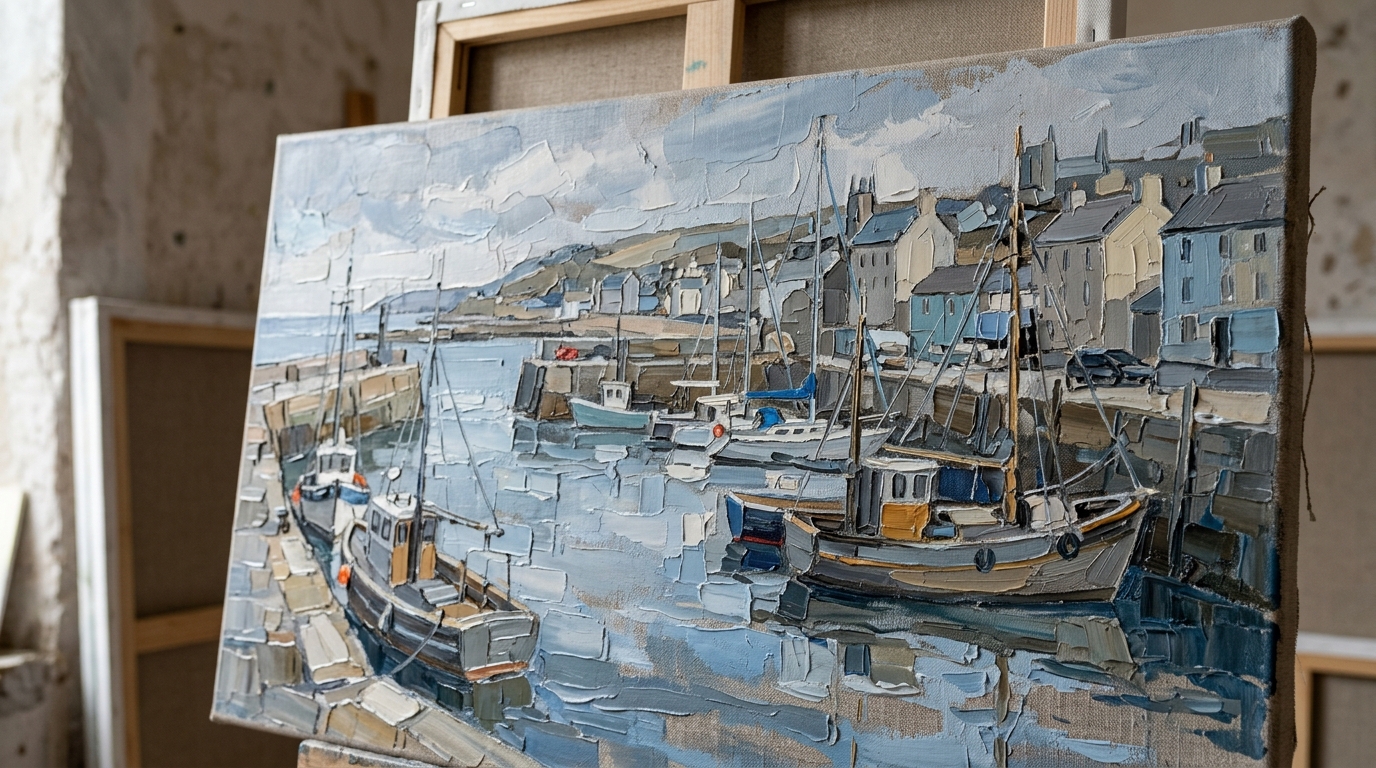
Avoid big-box marketplace items that lack a personal connection or verified origin. Ensure each piece comes with a signed Certificate of Authenticity to verify its limited run. Select prints that reflect 60 years of artistic practice rather than trendy digital designs. Maritime Seascapes' limited-edition coastal art includes a certificate with every canvas print, anchoring your room in work created from memory at a studio in Gibsons, British Columbia.
Mass-produced decor appears on thousands of walls, diluting the sense that your home reflects your unique taste. A numbered edition signals that only a small group of collectors will ever own that image. The certificate ties the print directly to Elizabeth A. Evans, who trained under Arthur Lismer at the Montreal Museum of Fine Arts and has painted professionally for more than six decades. When you invest in a limited edition, you're bringing a piece of Canadian art heritage into your living room, not generic wall coverage. That distinction matters to guests who notice the difference between a thoughtful, artist-signed canvas and a print churned out by an algorithm for maximum reach.
3. Incorporate representational coastal art to soften the sharp lines of modern architecture.
Modern living rooms often feature hard surfaces and geometric angles that can feel sterile. Calm maritime scenes like fishing villages and harbours introduce organic shapes and emotional depth. Use a large-scale canvas to act as a focal point that anchors the room's layout. A piece such as Paradise Point or A Quiet Dawn draws the eye toward remembered coastlines, grounding an open-concept space with the warmth of natural light and water.
The horizontal sweep of a harbour horizon counters the vertical thrust of floor-to-ceiling windows, creating balance rather than competition. Soft blues, greys and muted earth tones work seamlessly with neutral upholstery and concrete or wood finishes, while the representational subject matter keeps the room feeling human rather than showroom cold. If your home features glass, steel and polished stone, a fishing village scene painted from memory offers a visual refuge. The organic curves of boats and shorelines invite the eye to rest, lowering the pulse of a space dominated by straight edges and hard reflections.
4. Connect your modern interior to Canadian heritage through Group of Seven influences.
Look for artists mentored by figures like Arthur Lismer to ensure a high standard of composition. Representational painting styles carry a weight of Canadian identity that complements modern furniture. Incorporate West Coast imagery like the Sunshine Coast to celebrate local natural beauty. Elizabeth A. Evans trained at the Montreal Museum of Fine Arts under Lismer's mentorship, bringing that lineage into every maritime painting she creates today.
The Group of Seven built a visual language for Canadian landscape that remains instantly recognizable. Bring that tradition into a contemporary home and you anchor sleek, international design elements in a distinctly Canadian narrative. A canvas print of a coastal inlet painted with the structural clarity learned from Lismer's teaching feels both timeless and rooted in place. This connection matters particularly to collectors who value cultural heritage alongside aesthetic appeal. Pairing a modern sectional with a seascape born from Group of Seven principles creates a conversation between past and present, honouring tradition without sacrificing clean lines or open space.
5. Leverage art painted from memory to evoke a timeless sense of nostalgia.
Art created from the echoes of memory avoids the static, flat look of photographic reproductions. Scenes of remembered moments in British Columbia or the Atlantic coast feel more personal to the viewer. Choose pieces that remind you of childhood cottages or heritage to ground a new-build home. Maritime Seascapes' paintings emerge from a lifetime of looking at coasts and harbours, painted without photographs so each harbour gathers into one peaceful remembered moment.
Memory filters detail, leaving only the essential shapes, colours and feelings. That selective process produces images that feel familiar even if you've never visited the specific place. A harbour painted from memory resonates with anyone who has watched boats rest in still water or felt the quiet of an early morning coast. The dreamlike quality softens the precision of modern interiors, inviting contemplation rather than cataloguing details. Hang a memory-based seascape in your living room and you're not decorating with a literal snapshot. You're introducing an emotional echo, a sense of longing or calm that speaks to universal experience rather than one fixed location.
6. Create a sophisticated gallery wall by grouping multi-panel art sets or diptychs.
Use sets of two or three related prints (coastal inlets or harbours, for example) to fill wide horizontal spaces. Maintain consistent spacing between frames to adhere to modern design principles. Coordinate themes to tell a cohesive story that moves the eye across the wall. Clinics and galleries that specialize in diptych wall art can supply matching canvases; ensure each panel shares palette and brushwork for a unified look.
A single large canvas makes a bold statement, but a carefully curated set of smaller panels offers flexibility and rhythm. Hang two or three maritime scenes in a horizontal row above a long sofa, spacing them evenly so the gaps feel intentional rather than accidental. Each panel should stand alone compositionally, yet share enough colour and mood that the group reads as one installation. This approach works particularly well in open-concept homes where a single focal point might feel too heavy. The repeated theme (fishing villages at different times of day or various harbours along the same coast) creates continuity without monotony, guiding the viewer's gaze across the wall and tying together disparate furniture groupings.
7. Select ready-to-hang canvas prints for a sleek frameless modern look.
Canvas prints provide a clean edge that fits minimalist or industrial living room aesthetics. Eliminating a traditional frame puts the focus entirely on the artwork's colour and brushwork. Choose archival-quality canvas to ensure the colours remain vibrant in sunlit modern rooms. Maritime Seascapes offers ready-to-hang canvas prints that arrive prepared for immediate display, letting the calm harbour scene stand without ornament or interruption.
Frames add weight and formality, which can clash with the pared-down aesthetic of modern design. A frameless canvas stretched over a wooden support creates a floating effect against the wall, emphasizing the painting's surface rather than enclosing it in a border. The wrapped edges, printed continuously with the image, maintain visual flow from any angle. This approach suits homes with gallery-white walls, exposed beams or concrete finishes, where every decorative choice must justify its presence. Because the canvas arrives ready to hang, you skip the expense and delay of custom framing, moving straight from delivery to installation and enjoying the calm of a coastal scene without distraction or delay.
8. Anchor high-ceiling living rooms with vertical cloudscapes or triptych prints.
Use vertical orientations to draw the eye upward and balance tall walls. Large-scale vertical pieces prevent a room with high ceilings from feeling cavernous. Select soft blue and grey palettes to maintain a sense of calm in open-concept spaces. Shops that stock vertical triptychs in coastal themes can fill the height; ensure the palette complements your existing furniture.
A horizontal canvas in a double-height space leaves acres of bare wall above and below, making the room feel unfinished. Vertical compositions carry the gaze from floor to ceiling, anchoring the architecture without crowding it. Three stacked panels of cloudscape or shoreline create rhythm and structure, while the gentle maritime palette keeps the installation from overwhelming the room. In loft apartments or modern builds with soaring ceilings, a tall vertical arrangement fills negative space without the visual weight of a single massive canvas. The key is proportion: the artwork should occupy enough wall to register as a focal point but leave breathing room on either side so the architecture retains its clean lines.
9. Layer art cards and smaller originals in reading nooks for intimate detail.
Modern living rooms often have secondary zones like bookshelves or nooks that need smaller accents. Group framed art cards or small original paintings to add a layer of fine-art detail. Use these smaller pieces to introduce subtle pops of colour without overwhelming the main decor. Maritime Seascapes' art cards offer ten designs of coastal paintings, perfect for a shelf or niche where you want a quieter, more personal note.
While a large canvas commands the main seating area, these smaller works reward close inspection in spaces where you read, work or pause. Lean a few framed cards against books on a floating shelf, or hang a cluster of three above a side table. The scale invites intimacy rather than spectacle, letting you appreciate brushwork and detail that might be lost on a larger print viewed from across the room. This layered approach adds depth to modern interiors, which can otherwise feel like a single showroom vignette. The coastal palette carries through from the main artwork to the smaller accents, unifying the space without repetition.
10. Utilize seasonal maritime themes to rotate the mood of your living space.
Pieces like Winter Sleep offer a quiet, monochromatic feel for colder months. Switch to A Quiet Dawn or Paradise Point to bring in the warmth of coastal summer light. Rotating art keeps a modern room feeling fresh and seasonally relevant. Collectors tell us a maritime painting can remind them of a childhood cottage in one season and ground the room with calm in another; plan two or three prints to swap throughout the year.
Modern design values flexibility, and rotating artwork is a simple way to refresh a room without repainting or reupholstering. Store off-season prints in a dry closet, wrapped in acid-free tissue, and swap them as the light changes. A winter scene with muted greys and soft harbour fog suits shorter days and heavier textiles, while a sunlit inlet feels right when you open the windows in spring. This practice also protects each canvas from prolonged light exposure, extending its archival life. The ritual of changing art with the seasons adds a layer of intentionality to your home, marking time and celebrating the evolving beauty of coastal landscapes throughout the year.
11. Choose art that supports conservation and local artist communities.
Selecting work from a recognized Artist of the Year for the Nature Trust of B.C. adds a layer of purpose to your purchase. Supporting a living artist with over 60 years of practice ensures the continuation of traditional techniques. Ensure your decor choices align with values of craftsmanship and environmental appreciation. In 2022 Elizabeth A. Evans was named Artist of the Year by the Nature Trust of B.C., linking every maritime canvas to a commitment to conservation and the protection of coastal habitat.
Buy a limited-edition print from a living artist and your purchase sustains a career and a studio practice, not a faceless manufacturing line. Each canvas carries the weight of decades of training, mentorship and observation, connecting your modern living room to a lineage of Canadian landscape painting. This choice matters not only aesthetically but ethically: you contribute to the preservation of natural spaces that inspire the work, and you invest in a local creative economy rather than global mass production. Your wall becomes a statement about what you value, quietly advocating for art, nature and community every time a guest pauses to admire the calm harbour scene above your sofa.
How to Measure Your Living Room Wall to Ensure Art is Scaled Correctly
Before you order a canvas print, measure the width and height of the wall or the furniture grouping beneath it. A large canvas should cover roughly two thirds to three quarters the width of the sofa or console below, creating a balanced focal point. For walls without furniture, leave at least 30 to 45 centimetres of bare space on either side so the piece doesn't crowd the architecture. Hang the centre of the canvas at eye level (typically 145 to 150 centimetres from the floor), adjusting slightly lower if the room has very high ceilings.
In open-concept spaces, stand at the main seating area and confirm the artwork draws the eye without competing with windows or doorways. Sketch the wall to scale on graph paper, marking furniture edges and electrical outlets, then overlay the canvas dimensions to preview the layout. If you plan a gallery wall of smaller pieces, map each frame on kraft paper, tape the templates to the wall, and adjust spacing before you hammer a single nail. Canvas prints arrive ready to hang, so verify your wall can support the weight; most drywall anchors rated for ten kilograms will hold a standard 60 by 90 centimetre canvas securely. Accurate measurement prevents the disappointment of a print that feels too small or overwhelms the space, ensuring your modern living room achieves the calm, balanced look you envisioned.
Tips for Lighting Coastal Art to Highlight Brushwork and Texture
Natural daylight is the kindest light for maritime paintings, revealing the full spectrum of blues, greys and soft harbour tones. Position the canvas perpendicular to large windows so direct sun doesn't strike the surface, which can fade pigments over time and create glare that hides brushwork. In rooms without strong daylight, install a picture light or adjustable track fixture above the canvas, aiming the beam at a 30 degree angle to graze the texture.
LED bulbs with a colour temperature of 3000 to 4000 Kelvin (labelled neutral or soft white) preserve the coastal palette without the yellow cast of incandescent lamps or the blue harshness of cool fluorescents. Avoid uplights or floor lamps placed directly below the artwork; bottom lighting distorts the composition and throws odd shadows across the canvas. Dimmer switches let you match the light level to the time of day, keeping the painting visible in the evening without overpowering the room. In a room with recessed ceiling lights, angle two fixtures to wash the wall evenly rather than spotlight the centre, which creates hot spots that obscure detail. Every few months, dust the canvas gently with a soft microfibre cloth; accumulated dust dulls colour and softens the light in the scene.
How to Verify the Authenticity of Limited-Edition Prints
A genuine limited-edition canvas print includes a signed Certificate of Authenticity that lists the edition size, the print number, the artist's signature and the date of issue. The certificate should arrive with the canvas, either affixed to the back or enclosed in a protective envelope; store it in a safe place for future reference or resale. Check that the print number matches the edition size declared on the website or product listing; a fifty-print edition numbered 51 out of 50 is a red flag.
Look for the artist's hand signature or a printed facsimile accompanied by a signed certificate; unsigned prints from unknown sources lack provenance and hold little lasting value. Reputable galleries and artist studios publish the total edition size on the product page before you order, so you know exactly how many copies exist in the world. Avoid sellers who can't provide a certificate, claim unlimited availability, or offer steep discounts that undercut the stated edition; these practices suggest the work is mass-produced rather than limited. When you receive the canvas, inspect the print quality under good light; limited editions are printed on archival canvas with fade-resistant inks that show crisp detail and accurate colour. Maritime Seascapes includes a signed certificate with every limited-edition canvas print, documenting the work's place in a small, controlled edition and linking it to decades of professional painting practice.
Frequently asked questions
What modern wall art fits a coastal living room?
Modern coastal living rooms benefit from representational maritime paintings that introduce organic shapes and calm harbour scenes. Look for large-scale canvas prints of fishing villages, inlets or remembered coastlines painted in a calm, soft palette. Limited edition prints bring together soft colour, gentle light and Canadian West Coast heritage, all of which complement minimalist furniture and clean architectural lines.
Can maritime art work in a modern living room?
Yes. Maritime art softens the geometric angles of modern interiors and anchors the room with natural light and water imagery. Choose pieces painted from memory rather than photographs to gain a dreamlike, timeless quality that avoids the static look of digital reproductions. A ready-to-hang canvas print in neutral blues and greys fits seamlessly into contemporary decor without requiring ornate framing.
What unique coastal wall art works in a living room?
Unique coastal wall art is defined by limited edition size, signed certificates of authenticity, and work created by a living artist with decades of studio practice. The canvas prints at Maritime Seascapes show calm harbours, fishing villages and remembered coastlines in soft, quiet colour. These prints connect to Canadian Group of Seven traditions through mentorship under Arthur Lismer, adding a layer of heritage and craftsmanship that mass-produced decor can't match.
Where can I find unique Canadian maritime art?
Look for galleries and studios that feature work by Canadian artists with documented training and exhibition history. Maritime Seascapes is the focused coastal collection of an artist who was named Artist of the Year by the Nature Trust of B.C. in 2022 and paints at a studio in Gibsons on the Sunshine Coast. Every limited-edition canvas print includes a signed certificate, archival quality and a connection to more than 60 years of professional painting practice.
What makes wall art unique versus mass-produced?
Unique wall art is issued in a small, numbered edition with a signed certificate that verifies its limited run and links it to the artist's body of work. Mass-produced decor is printed in unlimited quantities, lacks provenance, and offers no personal connection to the maker or the subject. Choosing a limited edition supports a living artist, ensures exclusivity, and brings a piece of Canadian maritime heritage into your home rather than generic wall coverage.
How do I choose the right size wall art for my living room?
Measure the wall or the furniture beneath it, then select a canvas that covers two thirds to three quarters the width of the sofa or console. In rooms with high ceilings, consider vertical orientations or large-scale horizontal pieces to fill the height without leaving the wall feeling empty. Stand at your main seating area and confirm the artwork draws the eye as a focal point without competing with architectural features or windows.
Transforming a modern living room into a tranquil coastal sanctuary begins with thoughtful choices about scale, palette and provenance. Explore ten different coastal designs and you gain the flexibility to rotate themes with the seasons and discover the piece that resonates with your own memories of harbour light and remembered shorelines. Each canvas becomes a window to the calm of the West Coast, grounding your contemporary space in decades of tradition and a commitment to conservation that extends beyond your walls.
