
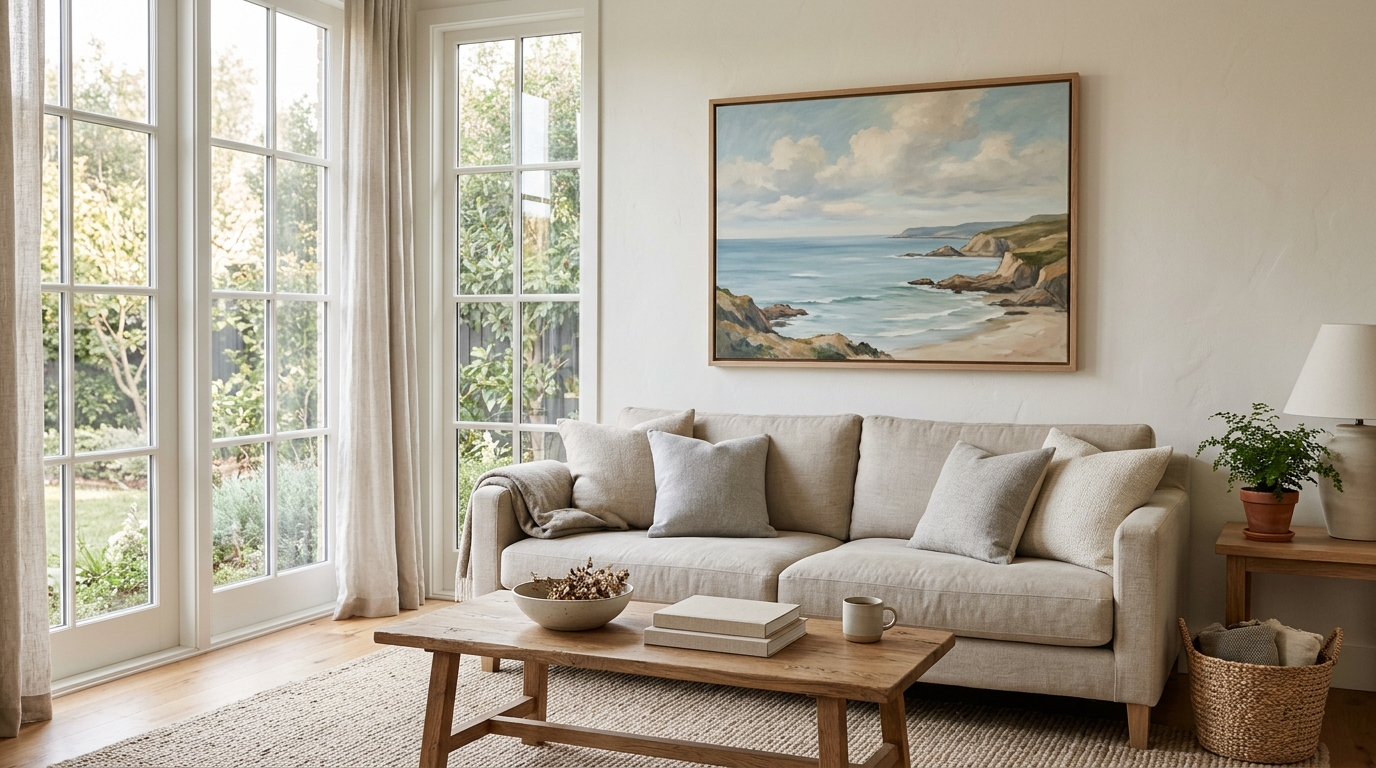
Unique Wall Art for Living Room: Finding Meaningful Calm
Last updated November 24, 2026
Unique wall art for living room means more than just different. It's art that can't be found everywhere, made by hand with intention, often in limited numbers or as a single original. When a painting carries an artist's memory, training and decades of practice, it brings both visual interest and emotional meaning to the room.
Table of contents
What Makes Wall Art Truly Unique in a World of Mass Production
The Heritage of Canadian Maritime Painting and the Group of Seven
How Memory-Based Painting Differs from Photographic Reproduction
Key takeaways
Unique wall art is defined by its origin story, limited availability and the artist's hand, not just its appearance.
Maritime paintings rooted in memory, rather than photography, offer a more emotional connection in residential spaces.
Limited-edition canvas prints with a signed Certificate of Authenticity provide exclusivity without the scarcity of originals.
Canadian coastal art connects heritage, place and personal memory in a way mass-produced decor cannot.
What Makes Wall Art Truly Unique in a World of Mass Production
Unique isn't a synonym for unusual. It describes art that has a traceable origin, a maker who signs their name, and a story that can't be duplicated by printing another thousand copies. Mass-produced prints from big-box retailers are designed to fill a wall, not to carry meaning. They're styled to match a colour palette, chosen by algorithm, and replaced when trends shift.
Artist-created work comes from a specific place and moment. The painter decides what to include, how to interpret the light, and when the work is finished. A limited-edition canvas print offers exclusivity without the scarcity of a single original. Each print is numbered, signed and accompanied by a Certificate of Authenticity that records its place in the edition.
The difference shows in the details. Brushwork you can see. Colour decisions that reflect a lifetime of practice. Compositions that resolve into calm rather than clamour for attention. When you hang a piece on your wall, you bring not just an image but a lineage, a decision-making process, and a moment the artist chose to preserve. That's what makes it unique.
A maritime scene painted from memory will show selective attention, where the light on the water or the angle of a fishing boat matters more than the exact position of every rock. A mass-produced print designed to match coastal decor trends shows neither selection nor care, only the efficiency of matching blues and greens to a sample board.
The Heritage of Canadian Maritime Painting and the Group of Seven
Canadian maritime painting carries a lineage that connects today's work to the landscape traditions of the early twentieth century. The Group of Seven established a visual language for the Canadian coast, forest and sky that still informs how painters see this country. Elizabeth A. Evans draws on this rich artistic heritage and foundational training in her own creative development. That connection bridges generations, from the founding movement to a painter working today on the Sunshine Coast.
Evans paints from memory, not photographs. She focuses on translating her internal recollections onto the canvas rather than replicating a literal image. That approach creates compositions that feel like remembered places rather than frozen moments, which suits a living room meant for rest and reflection.
More than 60 years as a professional painter means the work isn't an experiment or a side project. It's a sustained practice, rooted in one place and guided by a clear vision of what a coastal painting should offer. When you explore the work of Elizabeth A. Evans, you encounter that depth, the kind that can't be rushed or replicated by a production line.
In 2022, the Nature Trust of B.C. named Evans Artist of the Year, recognizing her contribution to Canadian coastal art and conservation. This recognition reflects the alignment between her subject matter and a broader cultural commitment to place and memory.
How Memory-Based Painting Differs from Photographic Reproduction
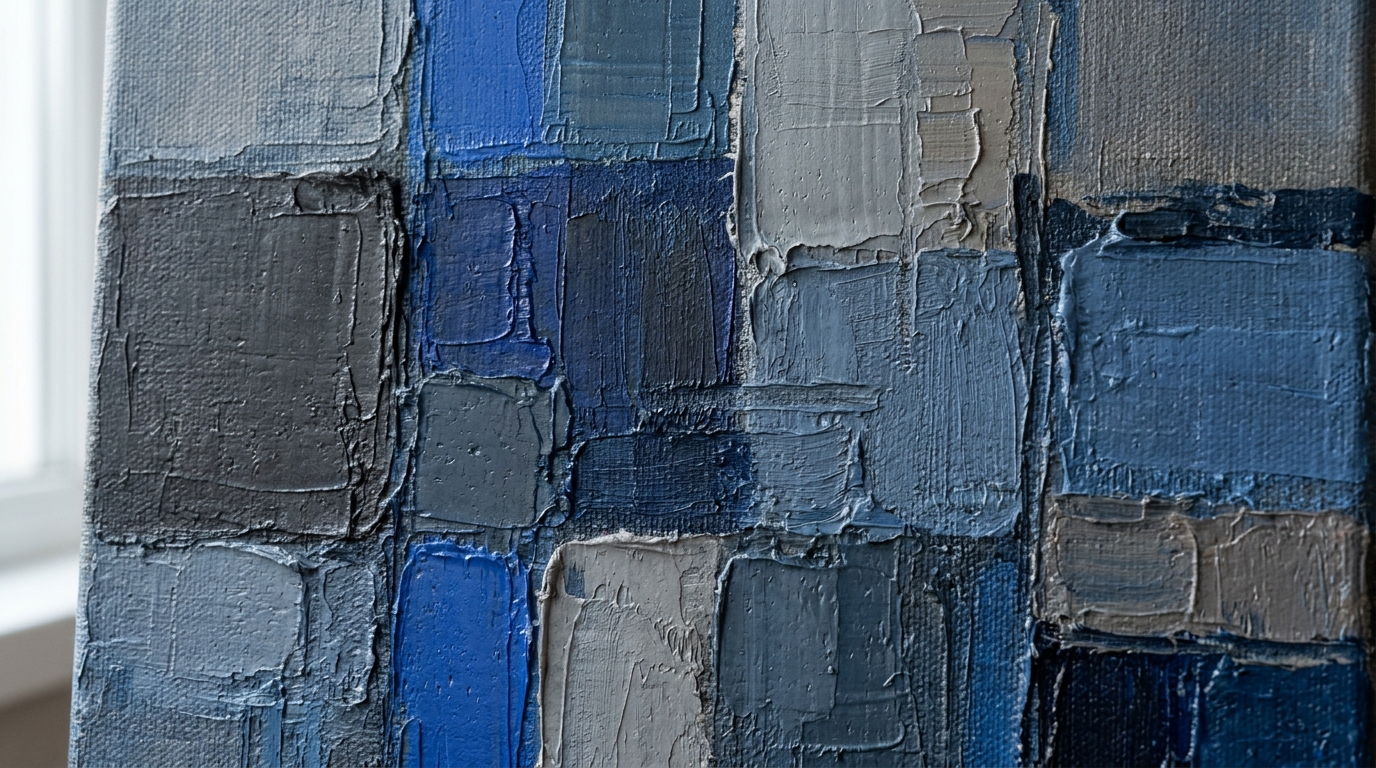
A photograph captures everything in the frame with equal weight. A painting from memory selects what matters: the angle of a boat, the way light falls on water at dawn, the quiet feeling of a harbour before the day begins. Memory allows the artist to combine elements from different moments, adjusting composition and colour to create the emotional truth of a place rather than its literal appearance. The result feels more personal and more inviting.
In residential lighting, the difference becomes visible. A print based on a photograph often looks flat, because the camera compresses depth. A painting built from memory in layers of colour holds its presence across the room and rewards closer inspection.
Practical rule: If a painting based on a photograph looks flat in your home, the camera has compressed the depth. A painting from memory holds its presence because the artist builds it in layers.
This approach connects to your own experience. If you remember a childhood cottage, a summer harbour, or the smell of salt air, a memory-based painting feels familiar even when the specific place is new. That sense of recognition is what transforms a living room into a space of calm rather than just a decorated room.
Choosing the Right Coastal Art for Your Living Room
Size matters, but so does subject and mood. A large horizontal canvas works over a sofa or fireplace. A vertical piece suits a narrow wall beside a window or bookcase. Measure the wall and allow at least 15 centimetres of breathing room on each side. Colour should complement your room without matching it exactly. A painting with blues, greys and muted greens can anchor a neutral space and add depth. Look for work that introduces a tone you want more of, not just what you already have.
Subject choice is personal. Some want a fishing village that reminds them of their grandparents' summer home. Others want open water and sky that bring a sense of calm and possibility. Trust the response you have when you first see the piece.
Limited-edition coastal art from Maritime Seascapes includes titles like Paradise Point, A Quiet Dawn, and Quiet Cove. Each is a numbered edition with a signed Certificate of Authenticity, which records the edition size, the print number, and the artist's signature. Browse the collection and you'll see coastal scenes painted from memory in Gibsons, British Columbia, each offered as a ready-to-hang canvas print.
Design insight: Hang art over a fireplace so the bottom edge sits 15 to 20 centimetres above the mantel, centred on the wall, not on the mantel itself.
A piece like Maritime Village at Dusk brings the quiet moment when day softens into evening, a time when the harbour settles and the light turns golden. That kind of subject works in a living room where you want to feel grounded at the end of the day.
What a Certificate of Authenticity Actually Proves
A Certificate of Authenticity is a signed document that accompanies a limited-edition print. It records the edition size, the print number, the title, the artist's signature, and the date of issue. This document proves the print is part of a controlled edition, not an open-run reproduction. The certificate protects the buyer by ensuring that the edition size will not change. If a print is marked as edition of 50, only 50 will ever be made. This scarcity is what gives a limited-edition print lasting value.
Without a certificate, there's no way to verify how many copies exist or whether the print was authorized by the artist. A poster, even a high-quality one, isn't a limited edition unless it's numbered, signed, and documented.
Watch out: A poster without a signature or edition number is not a limited edition, even if the design is beautiful. The certificate is what proves scarcity and value.
For collectors and gift-givers, the certificate is proof of thoughtfulness. It shows you chose something with intention, not something picked from a catalogue page or a big-box display. Explore the limited-edition print collection and every canvas print includes this documentation. The certificate ships with the print, ready to frame or file.
Maritime Seascapes also offers art cards of coastal paintings for those who want to send a thoughtful note or give a small keepsake. These are open-run prints on card stock, not limited editions, and they serve a different purpose: a way to share the work with someone who may not yet be ready for a canvas print.
When Unique Art Is the Wrong Choice
If you're decorating a short-term rental, a staged home for sale, or a temporary office, mass-produced prints are the practical choice. Unique art requires care, and it deserves a space where it will be seen and valued. If your goal is to match a specific colour swatch exactly, you may find limited-edition work frustrating. Artists paint for emotional truth, not to coordinate with a sofa. The best approach is to choose the art first and let it guide the room's palette.
Unique wall art isn't a quick fix for a bare wall. It asks you to slow down, consider what you want to feel in the room, and choose work that will still matter to you in ten years. If you're looking for something to fill space until you decide what you really want, a poster or a print on paper is a better interim step.
If you don't care about the story behind the work, there's no reason to pay for it. The value of artist-created, limited-edition art is inseparable from its origin. If the connection to heritage, memory and place doesn't matter to you, any image that looks calm will serve the same function.
Bringing Calm into Your Home
A living room is where you return at the end of the day, where you sit with morning coffee, where you notice the light changing through the seasons. The art on the wall should support that rhythm, not compete with it. Maritime paintings offer a focal point that invites you to pause. A harbour at dawn, a quiet inlet, a fishing village at dusk. These are images of stillness and continuity. They ground a room in something larger than the daily list of tasks.
Elizabeth A. Evans paints these scenes from her studio in Gibsons, on British Columbia's Sunshine Coast. Her work is informed by more than 60 years at the easel and a deep appreciation for the Canadian landscape tradition. In 2022, she was named Artist of the Year by the Nature Trust of B.C.
If you're ready to explore unique wall art that carries that kind of depth, claim the free Maritime Seascapes bookmark and join the studio newsletter. You'll see new work, read studio notes, and find the next moment of calm for your home.
Frequently asked questions
What unique coastal wall art works in a living room?
Coastal paintings with muted blues, greys and greens create a calming focal point without overwhelming the space. Look for work that balances detail and simplicity: enough interest to hold attention, but not so much that it feels busy. Memory-based maritime scenes, like fishing villages or quiet harbours, invite reflection and suit rooms where you gather to rest.
Where can I find unique Canadian maritime art?
Maritime Seascapes offers limited-edition canvas prints, originals, posters and art cards of coastal scenes painted by Elizabeth A. Evans. The collection is rooted in Canadian heritage and painted from memory in Gibsons, British Columbia. Every limited-edition print ships with a signed Certificate of Authenticity.
What makes wall art unique versus mass-produced?
Unique art has a traceable origin, a named artist, and a story that can't be duplicated by printing more copies. Limited editions are numbered, signed, and controlled by edition size, so only a fixed number exist. Mass-produced prints are designed to fill walls and match trends, not to carry meaning or connection.
How do I choose the right size wall art for my living room?
Measure your wall and allow at least 15 centimetres of space on each side of the frame. A large horizontal canvas works over a sofa or fireplace, while a vertical piece suits a narrow wall. Stand back and imagine the piece in place before you commit.
What is the difference between a poster and a limited-edition canvas print?
A poster is an open-run print on paper, often without a signature or edition limit. A limited-edition canvas print is numbered, signed by the artist, and accompanied by a Certificate of Authenticity that records the edition size. Canvas prints are stretched, ready to hang, and built to last decades.
How does art painted from memory differ from art painted from a photograph?
Memory allows the artist to select and combine elements for emotional truth, not literal accuracy. A photograph captures everything equally, while a painting from memory emphasizes what matters: light, composition, feeling. Memory-based work feels more personal and invites the viewer to connect their own experience to the scene.
What does a Certificate of Authenticity actually prove for a buyer?
The certificate records the edition size, print number, title, artist's signature, and date, proving the print is part of a controlled edition. It guarantees that the edition size will not change, which protects the print's lasting value. Without a certificate, there's no way to verify how many copies exist or whether the print was authorized.
