
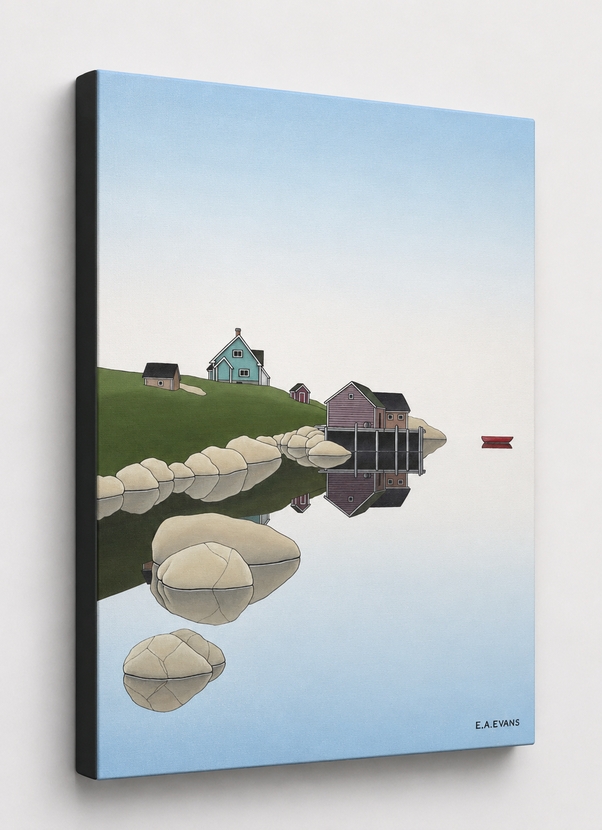
Gallery Wrapped Canvas Prints for Contemporary Display
Last updated November 15, 2026
Gallery wrapped canvas prints are a method of displaying canvas art where the printed canvas is stretched around the sides of a wooden frame, called stretcher bars, and secured on the back. This creates a frameless, finished edge that allows the artwork to be displayed without additional framing, delivering a contemporary, museum-quality appearance ready to hang.
Table of contents
What Gallery Wrapped Canvas Prints Are
Gallery wrapped canvas prints are a display method where canvas is stretched around wooden stretcher bars and secured on the back, leaving clean edges visible from the side. This technique eliminates the need for a separate frame. You get a contemporary, frameless look that suits modern interiors and lets the artwork command its full visual presence.
The printed image extends around the sides or uses an alternative edge treatment, making all four sides part of the finished presentation. Canvas Giclee Printing. The process ensures that the visible front and sides are taut, smooth and visually continuous, while all staples and fasteners remain hidden on the back.
Gallery wrapped canvas prints are often associated with fine art reproductions and giclee printing, a high-quality inkjet printing process used for fine art reproductions. In this process, high-quality archival inks (fade-resistant inks used to ensure longevity and colour stability) are applied to artist-grade canvas. The result is a piece that reads as finished art rather than wall décor, carrying the weight and gravitas of an original painting.
This approach has become the standard for presenting limited-edition canvas prints, which are produced in a finite quantity, often signed and numbered, offering exclusivity and value to collectors. When displaying original artwork reproductions, the presentation quality matches the intention of the original, and the limited availability enhances both the aesthetic appeal and the collectible nature of the piece.
Note however that Elizabeth Evans does NOT gallery wrap her prints with an extension of the image because she prefers to have the print match the original painting that has black borders.
The frameless construction allows the artwork to breathe within a room, without the visual interruption that a frame can introduce. For collectors seeking calm, grounding décor that feels personal and timeless, a black border honours the composition while delivering a presentation that feels both modern and respectful of the work itself.
How Gallery Wrapped Canvas Is Made
The production process begins with giclee printing, which uses fade-resistant archival inks to capture fine detail and subtle tonal transitions. The canvas (typically a heavy artist-grade cotton or cotton-blend weave) is printed with precision, ensuring that colours remain stable and vibrant for many years.
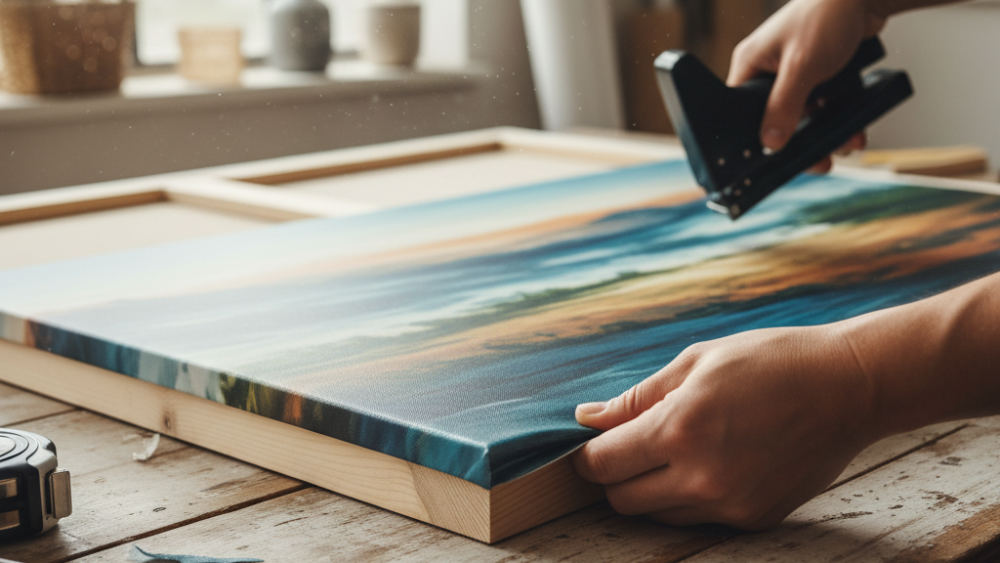
Once printed, the canvas is stretched by hand over solid wood stretcher bars, which form the internal wooden frame over which the canvas is stretched. This stretching process requires precision to avoid wrinkles, slack or distortion. Each corner is folded and secured with care. The tension must be even across the entire surface, because any inconsistency will show as a ripple or sag once the piece is hanging. Experienced technicians pull the canvas taut from the centre outward, checking alignment as they work.
The canvas is stapled or tacked on the back of the frame, keeping the visible sides clean and professional. This back-mounting technique is what distinguishes gallery wrapping from older methods where staples appeared on the sides or edges. The result is a piece where the front and all four sides are part of the finished presentation, and the back carries the structural elements.
Hanging hardware is typically attached during the stretching process, so the finished piece arrives ready to hang, with no additional preparation required. This convenience is one reason why homeowners and cottage owners appreciate these prints for immediate display in living rooms, bedrooms or reading nooks. The entire process (from printing to stretching to final inspection) is carried out with the same care given to an original painting.
Maritime Seascapes offers limited-edition canvas prints of Elizabeth A. Evans' original maritime paintings, such as Paradise Point, A Quiet Dawn and Quiet Cove, each with a signed Certificate of Authenticity (a document certifying the artwork's origin, edition number, and artist's signature).
Edge Options for Canvas Wrapping
Mirror wrap is a popular edge treatment where the outermost portion of the image is mirrored onto the sides, preserving the full front composition. This technique works well for images where the central subject occupies most of the frame, and where maintaining the integrity of the composition is a priority. The mirrored edge creates visual continuity without sacrificing any part of the original image.
The Wrap Used by Elizabeth Evans
Colour wrap (sometimes called black wrap) presents the sides as a solid colour, often black or a neutral tone, framing the front image. This approach suits compositions where the sides serve as a quiet border, allowing the front image to take centre stage without visual distraction. The solid colour can echo a dominant tone in the artwork or provide a neutral backdrop that complements a range of interiors.
Image wrap extends the original image around the sides, a technique suitable for compositions with less critical detail at the edges. This approach creates the sense that the artwork occupies three dimensions, wrapping around the physical structure of the frame. For maritime seascapes and coastal subjects with expansive horizons, image wrap can enhance the feeling of space and breadth.
Canvas Giclee Printing. The choice of edge treatment depends on the composition, intended setting, and personal preference for how the artwork appears on the wall. For works where the horizon or shoreline runs close to the edge, mirror wrap preserves the composition without cropping. For tightly framed subjects, a neutral colour wrap keeps the focus on the front.
The decision is both aesthetic and practical. A collector displaying a fishing village scene in a contemporary home might choose image wrap to let the harbour and boats feel expansive. Someone with a more traditional interior might prefer a solid colour wrap that anchors the piece within its surroundings.
Why Artists and Collectors Choose Gallery Wrap
Gallery wrapping suits contemporary and transitional interiors, where a clean, frameless presentation feels modern and uncluttered. The absence of a frame allows the artwork to occupy its space without competing visual elements. The wrapped edges create a finished, intentional look that signals quality and care. The depth of the stretcher bars creates shadow and dimension, giving the artwork physical presence and a contemporary, three-dimensional quality on the wall.
For maritime seascapes and coastal subjects, this presentation allows the horizon, water and sky to feel expansive, without the visual interruption of a frame. The calm, grounding quality of a harbour at dawn or a quiet inlet gains emotional weight when the image extends to the very edges of the canvas. Elizabeth A. Evans, a Canadian representational painter known as the Painter of Special Moments, paints from memory at her studio in Gibsons on British Columbia's Sunshine Coast, imbuing her work with a unique sense of remembered moments and Canadian coastal charm.
The depth of the stretcher bars (commonly 0.75 to 2 inches) creates a three-dimensional quality that draws the eye and adds physical presence to the artwork. Deeper bars cast subtle shadows on the wall, giving the piece a sculptural quality that commands attention from across the room. A standard 1.5-inch depth offers a balanced modern look. This is the standard that Elizabeth Evans uses. A deeper 2-inch bar delivers a bold, gallery-style statement.
Gallery wrapped canvas prints offer a museum-quality feeling in a home setting, giving fine art reproductions the gravitas of original paintings. Canvas Giclee Printing. Collectors seeking calm, grounding décor appreciate the unbroken image and the sense that the artwork breathes within the space, rather than being constrained within a frame.
Limited-edition canvas prints with a signed Certificate of Authenticity carry both aesthetic appeal and the value of exclusivity. Each print is numbered and documented, offering the satisfaction of owning a piece that exists in a finite quantity. The emotional connection for homeowners, cottage owners and retirees who love nature, the coast and Canadian identity is deepened by the knowledge that the work is both artist-made and limited in supply.
Caring for and Displaying Gallery Wrapped Canvas
Gallery wrapped canvas prints are durable and require minimal maintenance, but should be kept out of direct sunlight to prevent fading. Ultraviolet light gradually degrades pigments. While high-quality archival inks resist fading far longer than cheaper alternatives, prolonged exposure will eventually take a toll. Place the artwork where it receives indirect light, or where sunlight is filtered through curtains or blinds.
To clean the canvas, dust gently with a soft, dry cloth, avoiding water or cleaning solutions that can damage the ink or canvas texture. The surface of a stretched canvas is delicate, and any liquid can seep into the weave, causing stains or distorting the image. If the canvas becomes soiled, consult a professional conservator rather than attempting to clean it yourself.
Hang these pieces in living rooms, bedrooms, reading nooks, or above a fireplace, where the artwork is a focal point and visible from a comfortable viewing distance. The depth of the stretcher bar affects how the canvas sits against the wall. Deeper bars create more shadow and dimension, while thinner bars sit closer to the wall surface. Choose the depth based on the visual impact you want and the scale of the room.
Gallery wrapped canvas prints don't need a frame, though they can be framed later if the owner's taste or décor changes. This is uncommon given the finished, frameless aesthetic. The wrapped edges are already a complete presentation, and adding a frame can diminish the contemporary quality that makes gallery wrapping appealing in the first place.
Canvas On Demand, ensuring longevity and stability. The investment in materials and craftsmanship pays dividends in the years of enjoyment the artwork provides, and in the knowledge that the piece was made to last.
When Gallery Wrap Is Not the Right Choice
Gallery wrapping is less suitable for images with critical detail at the edges, such as tightly cropped portraits or compositions where text or fine detail runs to the border. In these cases, any portion of the image that wraps around the side becomes difficult to view, and the composition loses its intended focus. A framed print with a mat can preserve the full front composition and present the work as intended.
Traditional or period interiors may call for framed canvas or matted prints, where the formality of a frame complements the surrounding décor. A room filled with antique furniture, wood panelling or ornate trim can make a frameless canvas feel out of place, while a gilded or carved frame would tie the artwork into the room's aesthetic language.
There's also the risk of damage to exposed canvas edges in high-traffic areas or homes with pets or children, where a framed print offers more protection. The canvas edge, while finished and taut, is still fabric. A knock or scrape can leave a mark that's difficult to repair. If the artwork will be displayed in a hallway, a child's room or near a busy doorway, a frame adds a layer of physical protection.
Some collectors prefer the flexibility of a framed print, which can be re-framed or re-matted as tastes change, while a gallery wrapped canvas is a finished piece with fewer customisation options after production. The commitment to a particular edge treatment and depth means that the piece is complete as delivered, with less room for future alteration.
The choice between gallery wrap and framed canvas depends on the subject, the setting, and the emotional response the collector seeks from the artwork. For those who want the clean, modern aesthetic of a frameless presentation and who have the right space to display it, gallery wrapping offers a compelling, contemporary solution.
Bringing Maritime Calm Home
Gallery wrapped canvas prints deliver a contemporary, museum-quality presentation that suits calm coastal art and maritime seascapes. For homeowners and cottage owners who seek art that feels grounding and timeless, the frameless simplicity allows the image to take centre stage, bringing a special moment into the room without the distraction of a frame.
Maritime Seascapes offers limited-edition canvas prints featuring Elizabeth A. Evans' original maritime paintings, such as Paradise Point, A Quiet Dawn and Quiet Cove, each with a signed Certificate of Authenticity. Elizabeth is a Canadian painter with more than 60 years of practice, trained at the Montreal Museum of Fine Arts and mentored by Arthur Lismer of the Group of Seven. She paints from memory at her studio in Gibsons on British Columbia's Sunshine Coast, capturing the quiet moments of harbours, fishing villages and coastlines that feel both personal and timeless.
If you appreciate the craftsmanship and the feeling of a special moment held in colour and light, claim your free bookmark and join the studio newsletter to discover new work and explore the collection.
Frequently asked questions
What are gallery wrapped canvas prints?
Gallery wrapped canvas prints are a display method where the canvas is stretched around wooden stretcher bars and secured on the back, creating a frameless, finished edge. The printed image extends around the sides or uses an edge treatment like mirror wrap or colour wrap, so all four sides are part of the finished presentation. This approach delivers a contemporary, museum-quality look that's ready to hang without additional framing.
Are gallery wrapped canvas prints ready to hang?
Yes, these prints typically arrive ready to hang, with hanging hardware pre-installed on the back of the stretcher bars. The frameless construction and finished edges mean no additional preparation or framing is required before display. This convenience makes them popular for homeowners who want immediate, professional presentation.
How are gallery wrapped canvas prints made?
The canvas is printed using giclee printing with archival inks, then stretched by hand over solid wood stretcher bars. Each corner is folded and secured with precision to avoid wrinkles or slack, and the canvas is stapled or tacked on the back to keep the visible sides clean. Hanging hardware is attached during the stretching process, so the finished piece is ready to hang.
What is the difference between a stretched canvas and a gallery wrapped canvas?
Stretched canvas is a general term for any canvas pulled taut over a frame, while gallery wrapping specifically refers to a method where the canvas wraps around the sides and is secured on the back, creating a frameless, finished edge. Gallery wrapping is a subset of canvas stretching, distinguished by the clean, professional treatment of the sides and the expectation that the piece will be displayed without a frame. Both use stretcher bars, but gallery wrapping emphasises the contemporary, museum-quality aesthetic.
How deep are the stretcher bars for gallery wrapped canvas prints?
Stretcher bar depth typically ranges from 0.75 inches to 2 inches, with 1.5 inches being a common standard for fine art prints. Deeper bars create more shadow and dimension, giving the artwork greater physical presence on the wall. The choice of depth affects the visual impact and the contemporary feel of the finished piece.
Do gallery wrapped canvas prints need a frame?
No, these prints are designed to be displayed without a frame, as the wrapped canvas and finished edges create a complete, frameless presentation. The clean, modern aesthetic is part of the appeal, and adding a frame is uncommon, though it can be done if the owner's décor or preferences change. The frameless look suits contemporary and transitional interiors and allows the image to take centre stage.
Are gallery wrapped canvas prints durable?
Yes, high-quality prints use artist-grade canvas, archival inks, and solid wood stretcher bars, making them durable and long-lasting. They should be kept out of direct sunlight and away from moisture to prevent fading or damage, but otherwise require minimal maintenance. Proper care and placement ensure that the artwork retains its colour and texture for many years.
